
Update: The signup offer discussed in this post has expired. The new offer is a $500 statement credit for spending $1000 in three months, which is relatively straightforward to analyze. Visit DisneyRewards.com for more information.
Our loyal reader remember this site was actually founded on the premise of helping you use points and miles to get to Disney World. Oh how far we’ve come.
I haven’t chased credit cards for signup bonuses in a while. Part of the reason is that it’s time consuming, and I spend all my credit-card-thinking time evaluating the “coupon books” that the high-end cards have become, or else wrapped up in the nonsense that is Bilt 2.0. The other reason is that while we still spend a decent number of points and miles, our travel is somewhat more limited these days and I just don’t need the massive point bonuses from signup bonuses anymore.
So when the Disney Inspire Visa card was announced with its very interesting and seemingly generous signup bonus, my first thought was “wow that’s good.” And then, as always, I asked myself “…OR IS IT?” In this post, I dip my toes back in the water of credit card signup bonuses to figure out—is the Disney Inspire Visa signup bonus really that good?
Reminder: Nothing in this post is intended as financial advice. Consult a professional if you need financial advice.
Quick Primer on Points and Miles
In case you’re new to this topic, let’s quickly cover the two things you need to know about points and miles for this post to make any sense.
What’s a Credit Signup Bonus?
A credit card signup bonus is something a credit card issuer gives you for signing up for the card and meeting certain conditions. Here are some examples of typical bonuses:
$50 statement credit for making your first purchase on the card
50,000 credit card points for spending $1,000 in your first 3 months with the card
100,000 airline miles for spending $3,000 in your first 3 months with the card
Bonus terms vary by issuer, card, and sometimes even by customer (or you can click into an offer, and if you leave the page you’ll never see the offer again).
Now, in the above examples, I assume we all know why a $50 statement credit is nice. But you also need to understand why those points and miles have value, too.

Why Are Credit Card Points Worth Anything At All?
Here’s a very quick explanation of why points—like Chase Ultimate Rewards, or American Express Membership Rewards, or Citi ThankYou points—are worth anything.
As a baseline, these points that you earn on your credit cards can usually be used for statement credits (or “cash back”), to pay for things on Amazon or other sites, or to get gift cards. You might expect to get something like 0.8 cents per point in this case—so 1000 points are worth $80.
To get slightly more value, most of these points programs have some travel portal you can use. Depending on what credit cards you have and what promos are ongoing, you’ll get different value for your points by booking your travel through the portal (it’s similar to booking through Expedia or Booking dot com). This might get you 1 cent to 2 cents with minimal effort.
But the real value comes when you transfer these points to partner airlines (or hotels, but we’ll stick with airlines here). I’ll give specific recent examples below, but basically these different credit card point systems partner with different (sometimes overlapping) airlines. You transfer your points to the airline where they become “miles” or whatever loyalty system the airline uses. The airline sells its flights (or flights on other airlines) for some number of miles, so you use miles instead of paying the cash rate you’d normally pay.
Here’s a fake, but simple, example:
You have 25,000 points with Credit Card Company
You transfer those to Airline, where they become Airline Miles
Airline sells a Flight for $500 OR 25,000 Airline Miles
You book the Flight
You’ve gotten 2 cents per point.

How Much Value Can You Get With Points?
Here are two recent examples of how I actually used points (I also had to pay taxes and fees with cash, so we account for that, too). These were transfers from different credit card programs, but that’s not particularly relevant. All this pricing is per person:
57,500 Virgin Atlantic miles + $302 for business class to Paris ($2,284 cash price)
40,000 United Airlines miles + $43 for economy from Dubrovnik ($2,058 cash price)
For those two redemptions, I got 3.4 cents per mile and 5 cents per mile. The combined value for the roundtrip was about 4.1 cents per mile.
Now, I don’t think there’s enough honesty in the points and miles community about whether that’s really 4.1 cents of value. I never would have paid the quoted cash rates for those flights, so the points aren’t being used to keep that much cash in my pocket.
For example, next best option for this roundtrip to Europe was $2,834 for roundtrip business class. If you use that figure, then the math looks like:
97,500 miles + $345 vs. $2,834 cash yields 2.5 cents per point
Now, compared to this second best option, with the option I went with I save myself some transit (I get to fly home directly from Dubrovnik) but lose some luxury (the flight from Dubrovnik is economy). If we say that all balances out, then really I’m getting 2.5 cents per point, not 4.1 cents
Of course, a rare person who absolutely had to book my specific routing (business to CDG, economy from DBV), or who would do it without considering other options, really would get that 4.1 cents of value.

Comparing Signup Bonuses — Disney Inspire Vs Chase Sapphire Preferred
Note: This section reflects publicly available signup bonuses as of March 6, 2026.
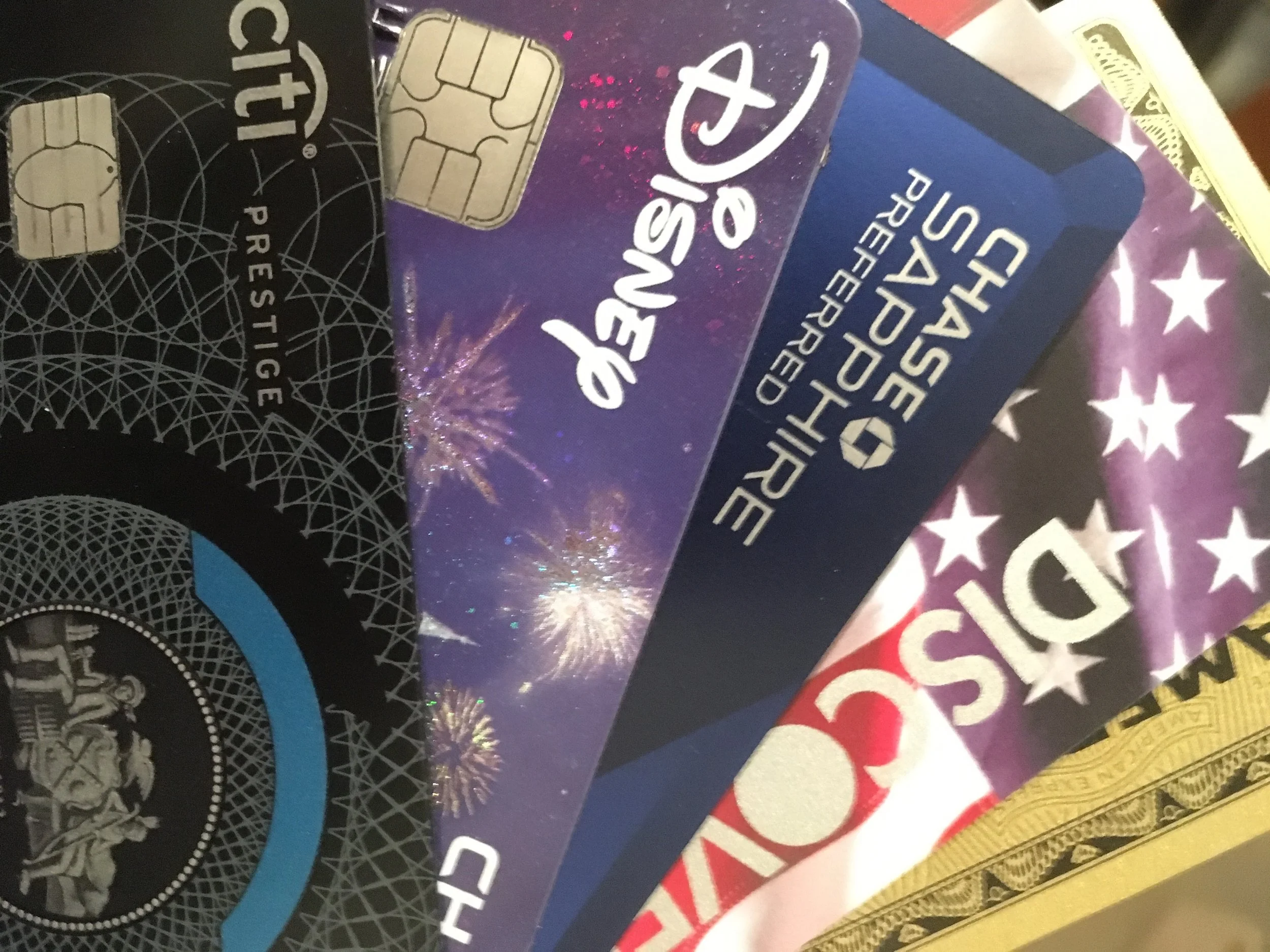
With all that background, now we can get to the real heart of the analysis. For this section, I’ve just picked the Chase Sapphire Preferred to compare the Disney Inspire card too. The Sapphire Preferred has long been the gold standard of “beginner” points and miles cards. You could do this analysis with other cards, too.
The Chase Sapphire Preferred currently offers 75,000 bonus points after you spend $5,000 on purchases in the first 3 months from account opening. There’s a $95 annual fee for that card.
The Disney Visa Inspire card, with an annual fee of $149, has a signup bonus of up to $600:
Get a $300 Disney Gift Card eGift to use upon approval
Earn a $300 statement credit after you spend $1,000 on purchases in the first 3 months from account opening
Obviously the Disney Visa Inspire bonus is easier to earn.
I’m not going to dive too far into it, but the minimum value you should be getting for Chase Ultimate Rewards points is 0.8 cents per point. That’s the amount you get for using them for things like Amazon, for example. Realistically, getting 1 cent per point should not be difficult. But we’re trying to be generous in our analysis here.
At 0.8 cents per point, the 75,000 points are worth…$600! At the minimum value for Chase Ultimate Rewards points, the Chase Sapphire Preferred’s bonus is worth $600. That’s the same as the Disney Visa Inspire card, for a lower annual fee, but the bonus is more difficult to earn.
But if we use my 2.5 cents per point calculation from above, the 75,000 points are worth $1,875. Or if you jump all the way up to the 5 cents per point valuation (that I don’t love using, as discussed above) you come to $3,750. That is, while the 75,000 points are worth at least $600, they have a much higher ceiling.

Bottom Line: The Disney Inspire Visa Is A Competitive Option
As to the specifics of the signup bonus for the Disney Inspire Visa, I think it’s a good but not fantastic signup bonus. That is to say, if you’re just lured by the bonus, this might be a time to upgrade your points and miles game and start chasing real value.
But the Disney Inspire Visa is about much more than the bonus. As discussed in our analysis post, the card also offers:
200 Disney Rewards Dollars after spending $2,000 per anniversary year at Disney Resorts in the U.S. and Disney Cruise Line bookings
$100 statement credit after spending $200 per anniversary year on Disney Theme Park Ticket purchases in the U.S. (including Walt Disney World Annual Passes, Disneyland Magic Key Passes and Disney Water Park Tickets)
$10 monthly statement credit for qualifying Disney streaming purchases ($120 total per year)
These are pretty notable perks, and you’d have to do some work to compare this card to the Chase Sapphire Preferred—or any other card—more comprehensively. And that’s the bottom line. The signup bonus does the work it needs to do to put the card in the conversation.